

By Olive Tree Homes
Published October 30, 2026
On this page
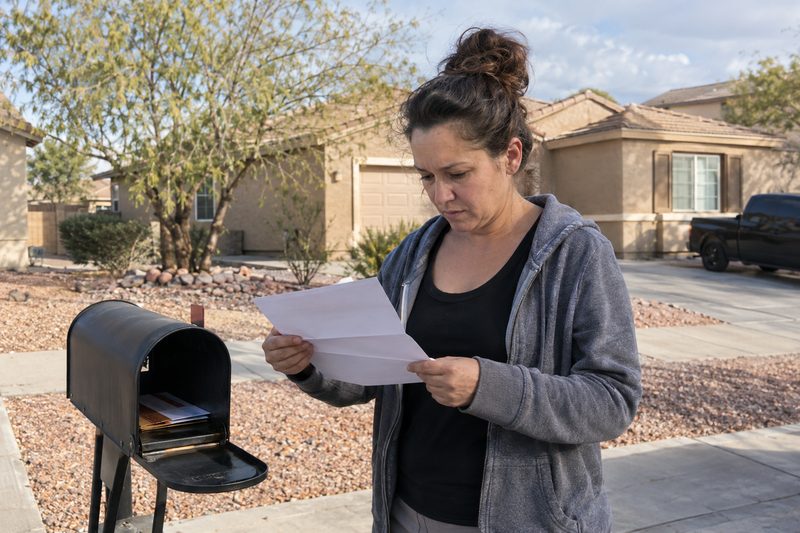
Getting a Notice of Default is stressful, but don't panic. You still have time, and you still have choices. We have helped many sellers who were in default on their mortgage, and as long as they acted fast, they could still save their equity.
The main goal at this point is to avoid a foreclosure auction, which Nevada calls a trustee's sale, where you risk losing the equity you may have built up over years, because buyers there usually pay less, for reasons we explain below. You own the property until that sale, so you can still sell your house after a Notice of Default, as long as your sale closes first. The money from your sale pays off the loan, and what's left is yours.
Get a guaranteed cash offer on your property, even with a Notice of Default recorded. For a Las Vegas-area property, Olive Tree Homes can walk through it with you, get that offer with the property as it is, and put it on the market at the same time if you have room for that. You don't have to fix anything, clean it out, or pick a way of selling before you contact us.
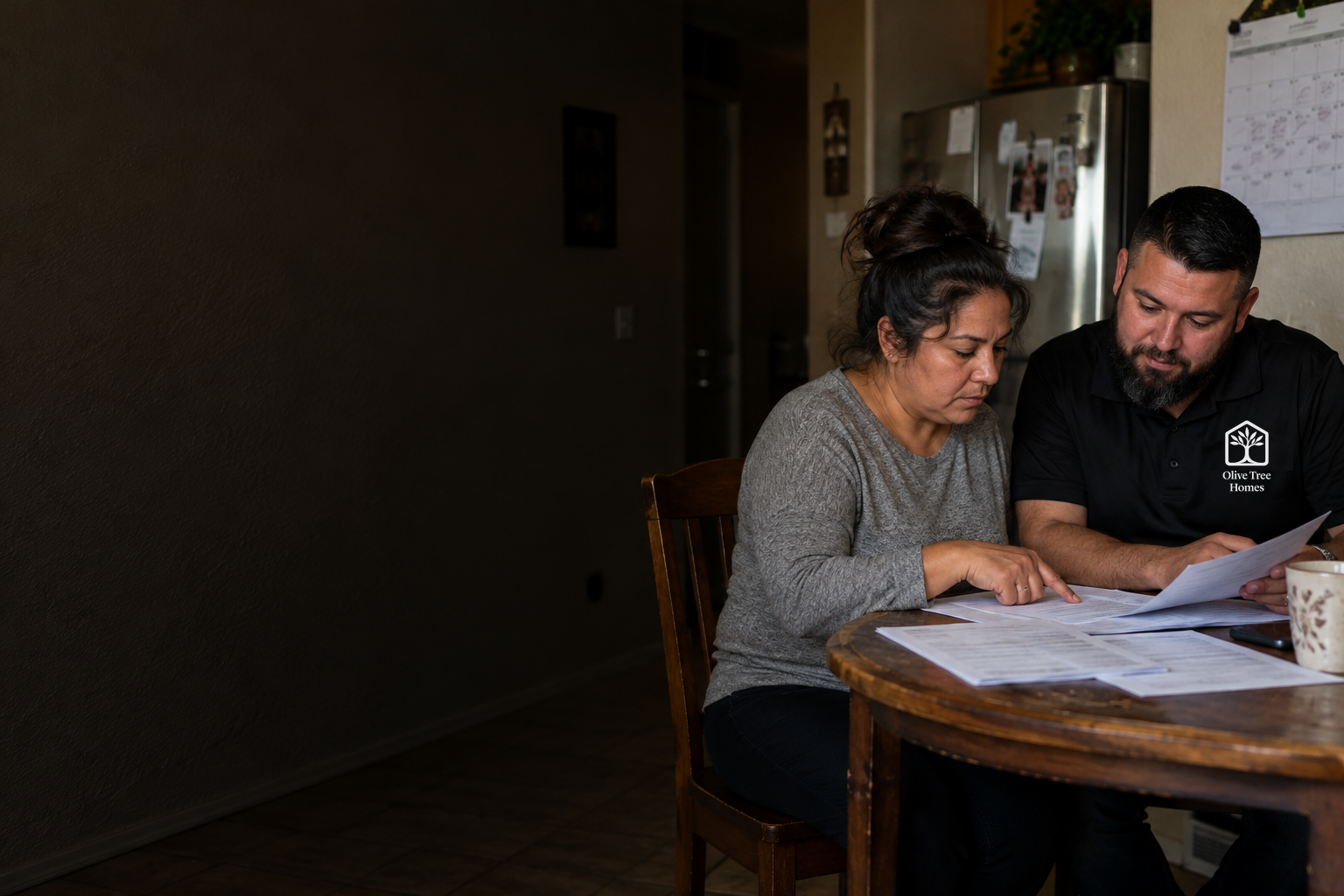
The first thing we do is look at the dates on your notice, find out what's actually owed, and check title for other liens. Below is what we'd walk you through at the kitchen table: what the notice means, how the timeline works, where the sale money goes, and what can go wrong.
What does the notice actually mean?
It means your lender has started the process of having the property sold to collect on the loan. The full name is Notice of Default and Election to Sell, and both halves matter: the loan is in default, and the lender has chosen to have the property sold if that isn't resolved. The sale is handled by the trustee, the company named in your deed of trust to do this job.
You still own the property. You can still sign a contract, open escrow, and close a sale.
The number that decides most of what comes next is your payoff, the full amount the lender is owed at closing. It usually includes the past-due payments, the lender's fees, and any attorney's fees, trustee's fees, and other foreclosure costs charged so far, so it's usually more than the balance on your monthly statement. Until you have the payoff in writing, any idea of what you'd keep is a guess.
Where the sale money goes
The sale price isn't what you walk away with. At closing, the escrow company pays what's owed out of the sale money, and you don't write a check for any of this unless the price falls short.
-
Your mortgage is paid off
Escrow pays your lender the full payoff directly. That means the remaining balance and the past-due payments, plus the lender's fees and any attorney's fees, trustee's fees, and other foreclosure costs charged so far, so use the written payoff figure and not your monthly statement. A sale that closes in time and pays this off is how you avoid the auction.
-
Other liens are paid
A second mortgage or home equity line, unpaid HOA assessments, and any other lien on the property are paid from the sale money too. A lien you forgot about still comes out of what you'd keep, which is why we pull a title report early instead of finding out near closing.
-
Closing costs and any fees are paid
Closing costs come out next to the loan and liens, and who pays which ones is set in the contract, so get that in writing. Any selling fees are paid here as well.
-
You get what's left
This is the number to compare offers on. A higher price can leave you with less after repairs, buyer credits, and the costs of waiting to close. If the price won't cover the payoff, liens, and costs, nothing is left, and the sale needs your lender's agreement. That is a short sale, which we cover below.
How much time do you really have in Nevada?
You have at least three months from the day the Notice of Default is recorded, which may not be the day it reached you. Before the property can be sold, the trustee also has to post and publish a second notice, the Notice of Sale, often titled Notice of Trustee's Sale, which gives the date. Here is what NRS 107.080 requires at each step.
The Nevada trustee's sale timeline
| Milestone | What Nevada law requires | What it means for selling |
|---|---|---|
| Notice of Default recorded | The Notice of Default and Election to Sell is recorded with the county and mailed to you. | You still own the property and can sell it. This is when you have the most time and the most ways to sell. |
| 35 days after recording | The trustee can't sell unless the default has gone unpaid for 35 days, counted from the day after the notice is recorded and mailed. | This is the time to get a written payoff and a title report, while there's still room to deal with what they show. |
| 3 months after recording | No sale can happen until at least 3 months have passed since the notice was recorded. | The soonest a trustee's sale can happen, and only if the Notice of Sale has also been given. Putting the property on the market is still possible if you start early. |
| Notice of Sale | The Notice of Sale is posted for 20 days in a public place in the county and published three times, once a week for 3 consecutive weeks. | You now have a date, and the question becomes which kind of sale can close before it. |
| Trustee's sale | The buyer at the sale takes title, and you have no right to buy the property back. | Your sale has to close before this date, unless the trustee's sale is postponed. |
The second notice changes things more than the first. Many of the sellers we talk to have a Notice of Default and no Notice of Sale. They have some time, and every way of selling is still open.
Sellers with a Notice of Sale are the ones under the gun, because there is now a date and fewer kinds of sale can close before it. A trustee's sale can be postponed, but don't plan around that. Go by the dates on your own notices, and treat the sale date as real until it actually moves.
What happens if the trustee's sale goes ahead?
The property is sold at the time and place on the Notice of Sale, and you no longer choose the buyer or the price. The buyer at the sale takes title. Under NRS 107.080 there is no right of redemption, which means you can't buy the property back afterward.
You'd be gambling on what people will pay, and auction buyers pay less than regular cash buyers for two reasons. First, they can't see the inside of the property, so they have to assume it's in worse shape and price it that way. Second, the auction requires cash up front, so there's no time to get a loan.
That second reason shrinks the pool of buyers a lot. Before the auction, your buyers can include small, mom-and-pop fix-and-flip buyers who use a hard money loan, a short-term loan from a private lender, and who might only have to put 5 or 10% down. At the auction, the only buyers are the ones strong enough to hand over a cashier's check right there at the sale, and fewer buyers competing puts your equity at risk.
Any money above what's owed doesn't simply vanish. Under NRS 40.462, the proceeds pay the costs of the sale first, then the loan being foreclosed, then any junior liens, and the balance goes to you. If the bidding comes in low, that balance can be small or nothing, and if anyone disputes the money, the balance can be held until that's resolved.
That is why the goal is to close before the date. In a sale of your own, you pick the buyer and agree to the price, and whatever is left after the payoff comes to you through escrow.
Which kind of sale can close in the time you have?
The less time you have before a sale date, the more a guaranteed cash offer's certainty is worth. With more time, putting the property on the market too can bring in more buyers and possibly leave you more after costs.
If a Notice of Sale is posted or the date is close, a Guaranteed Offer usually fits best. It's a cash offer to buy the property as it is, with the price and terms in writing, and it's usually the fastest way to sell. Most cash buyers expect to make a profit, so the price reflects that and the property's condition. If the property has equity, this kind of sale can close in about a week once the payoff is confirmed, which is enough time to get title sorted.
If no sale date is set yet, or the date leaves room for a sale on the market, look at Sell My Home Fast. We put the property on the market at a price that attracts cash buyers and sells quickly. More buyers see it than a cash offer alone reaches, and it usually sells below a top retail price.
If the notice was recorded recently and no Notice of Sale has been posted, you may have room to Test the Market, which means a higher asking price to see what buyers will pay. It can leave you the most if the higher price holds up after repairs, buyer credits, and your costs while waiting to close. A financed buyer also needs time for a loan approval and escrow, so this path needs the most room.
You don't have to choose just one. When the time allows, Olive Tree Homes shows the property to our cash buyers and puts it on the market at the same time, so you're not limited to one buyer's offer. We then go through each written offer with you on what you'd keep, when it would close, and the work it asks of you. Our guide to comparing a cash offer with listing shows how to work that out.
If the property is a rental, we can sell it with a tenant in place, as our guide to selling a rental property with tenants in Las Vegas explains. A vacant property sells as it is. Either way, tell us the date, and we start by confirming the payoff and pulling the title report, so every offer you compare is based on what's actually owed.
Example: a sale that closed before the trustee's sale
Here's an illustration of how this can go, not a specific client.
A Las Vegas owner fell behind on mortgage payments after a financial setback and received a Notice of Default. They had about $85,000 in equity and listed the property with a Realtor at $425,000. Over two months they had showings and an offer, but the buyer's financing fell through and the property went back on the market.
Then the Notice of Sale arrived with a trustee's sale date. A new financed buyer would need inspections, a loan approval, and escrow, likely 30 to 45 days, and they didn't have that.
They contacted us. We confirmed the payoff and the sale date, pulled the title report, and got them a guaranteed cash offer of $385,000 with no contingencies and the buyer paying all closing costs. They accepted, escrow opened with a Las Vegas title company, and the sale closed seven days later. The loan was paid off through escrow, about $340,000 including the past-due payments and fees, and the owner kept about $45,000.
This is an illustrative example of how a cash sale can work before a trustee's sale, not a specific client. Offers, closing times, and proceeds vary. A sale has to close before the trustee's sale, or the sale has to be postponed, to avoid foreclosure.
Your next move
Talk through your options while you have time.
Tell us about your property and when you’d like to sell.
Get My Cash Offer →
What can go wrong before closing?
Most of the trouble comes from finding something out too late, when the date leaves no room to deal with it. A buyer's loan can fall through on any financed sale, as it did in the example, and the weeks spent on that buyer don't come back. That's why we check a buyer's ability to close and don't just look at the price.
The payoff can come in higher than you expected, or a lien you didn't know about can turn up on the title report. Either one changes what you'd keep, and together they can turn a sale with equity into one that needs your lender's agreement. We start with those two things so you hear about them first.
Someone on the deed may be hard to reach. Everyone on the deed usually has to sign, or authorize someone to sign, so if a former spouse or a relative is still on it, find that out now and not in the week of closing.
The contract can give the buyer a way out. Ask what would let the buyer cancel or change the deal later, and confirm the closing date falls before your trustee's sale date. We negotiate price and terms for you and look for conditions that could cost you later.
Waiting can also take options away. Every week you spend waiting on an answer is a week buyers aren't seeing the property, and the sale date stays where it is unless the sale is actually postponed.
What do you need to gather?
Start with the notice, a written payoff, and the names of everyone on title, because they tell us what has to be paid at closing and who has to sign. With your approval, we can help you get the payoff and work through what the servicer and any other lienholders need.
- Your Notice of Default, and any Notice of Sale: we work from the recorded dates and the trustee named on them.
- A written payoff statement: ask your loan servicer, the company you send payments to.
- Any second mortgage or home equity line: each lender's payoff counts toward what you'd keep.
- An HOA statement, if you have an HOA: it shows the unpaid assessments and charges.
- The names of everyone on title: tell us if anyone may be hard to reach.
Do you need to fix the property up first?
Usually not, and with a sale date on the calendar, repairs spend time and money you may not get back. Cash buyers price the property as it is, after the repairs it needs, their costs to hold and resell it, and the profit they expect to make. If you pay for repairs yourself, you pay retail prices for work most investors get done for less.
Cleaning helps, and so does stopping anything that could cause more costly damage, which is usually a water leak. You can usually leave belongings behind; that is part of what we negotiate. Our guide to selling a property as-is in Las Vegas covers what buyers discount and what Nevada still requires you to disclose.

What if you owe more than the property is worth?
Then you're looking at a short sale, which needs your lender or servicer to agree to take less. The CFPB defines a short sale as a sale for less than what you owe on the mortgage. If you're not sure whether you have equity, the payoff statement and a guaranteed cash offer will tell you. Ask a Nevada attorney or tax professional whether you could still owe the difference.
We handle short sales, including working with the lender to get to the bottom of what's owed. The lender's answer can take time, so start as early as you can, because a posted Notice of Sale leaves less room to get it.
What if the notice is from your HOA?
An HOA in Nevada can record its own Notice of Default and Election to Sell for unpaid assessments, and the timeline above doesn't apply to it. Under NRS 116.31162, an HOA can't sell until, among other steps, the assessments have gone unpaid for 90 days after its notice is recorded. The title report finds the HOA lien, and a sale pays it through escrow, along with any mortgage.
Which investor letters should you answer?
Don't decide by the first number anyone mentions. A recorded Notice of Default is public, so letters, texts, and calls from investors are normal, and each one is a single buyer telling you what that buyer will pay. Before you sign with anyone, get the price, the closing date, and who pays which closing costs in writing.
We know the buyers and work for you, so you aren't limited to one buyer's number. Our guide to checking whether a "we buy houses" company is legit has ten questions to ask any of them.
What if you want to keep the property?
You may be able to, and selling isn't the only option. A lender may let you catch up the past-due amount, called a reinstatement, or agree to a loan modification. Ask the servicer for the exact amount in writing.
If you live in the property, Nevada's foreclosure mediation may give you time to work something out with the lender. You can petition the district court for mediation no later than 30 days after the Notice of Default is served on you. You pay a $25 filing fee plus your share of the mediation fee, which the parties split and which can total up to $500. While a timely petition is pending, no further step toward the sale can be taken until mediation is complete.
Mediation doesn't apply if you have surrendered the property or have an active bankruptcy. For an owner-occupied property, Nevada law also gives you until 5 days before the sale date to make good the default.
A Nevada attorney or a HUD-approved housing counselor can tell you which of these fits. Knowing what the property would sell for and what you'd keep is still useful while you decide.
How do you get started?
Let's work out your next step. Maybe you want to know what you'd keep, whether a sale can close in time, or how to stop dealing with the letters. Send us the property address, the date on any notice you've received, and roughly what you owe.
When we walk through the property, we'll tell you plainly which sale can close before your date and estimate what each one would leave you. We explain the arrangement and any fees before you sign anything, and you're never obligated to accept an offer. Tell us about your property and the date on your notice. You don't need to choose a selling method before contacting us.
This article is general information, not legal or tax advice. A Nevada attorney or tax professional can advise you on your situation.
Recommended reading
Selling Options
What’s the best way to sell your property?
Compare a direct cash offer, selling on the market as-is, preparing for retail buyers, and selling it yourself. Start with your timeline, the work involved, and what you could keep.
Sources
This site is protected by reCAPTCHA and the Google Privacy Policy and Terms of Service apply.