

By Olive Tree Homes
Published October 18, 2026
On this page
You can sell your rental property without waiting for your tenant to move out. If the lease ends within about three months, we can get you a guaranteed cash offer with your tenant still living there. With a longer lease, rental investors who want a property that already has a tenant may still buy, especially for more affordable properties, and we compare their offer with what you'd keep by waiting for the vacancy.
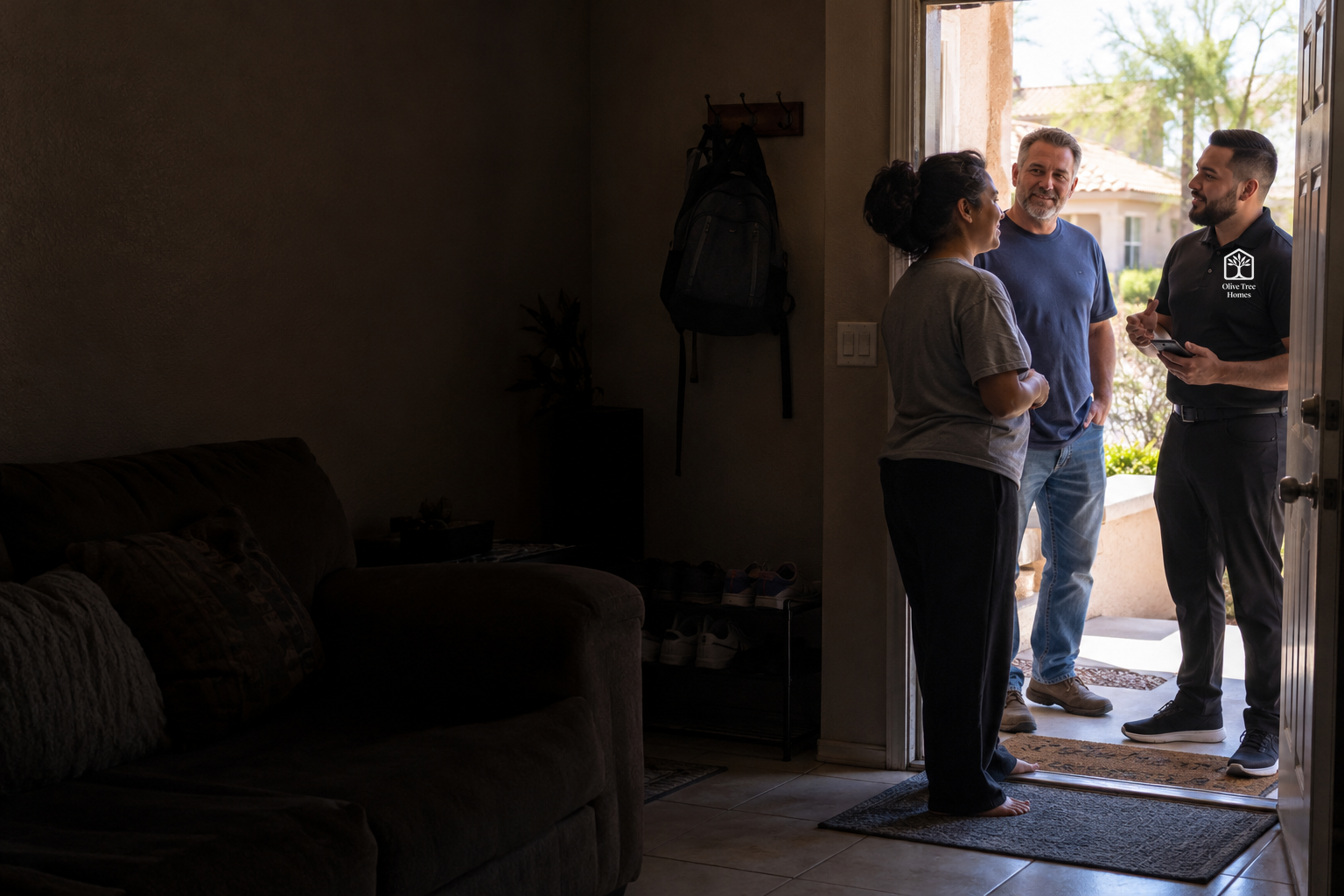
Olive Tree Homes works with your tenant directly on access, using scheduled showing windows so they aren't disrupted much. If you live out of state or use a property manager, you don't have to be there for showings. You keep collecting rent while offers come in.
Can you sell a Las Vegas property with a tenant living in it?
Yes. In Nevada, the lease generally stays in place when the property sells, and the buyer becomes the landlord. Under NRS 118A.349, after a voluntary sale the new owner generally takes on the previous landlord's rights and obligations, and your tenant keeps theirs under the existing rental agreement.
What that means for your sale depends on the kind of tenancy:
- Fixed-term lease: the buyer takes over the lease and its end date. Your tenant doesn't need to leave before you sell.
- Month-to-month: the buyer takes over the arrangement. If you or the buyer want the property empty, Nevada generally requires at least 30 days' notice to end a month-to-month tenancy, and a tenant who is 60 or older or has a disability can ask for 30 more days (NRS 40.251).
- No written lease: ask a Nevada attorney how the arrangement is treated before you promise a buyer a move-out date.
Who buys a property with a tenant in place?
Three kinds of buyer could want your property, and two of them may buy it with your tenant living there. A buyer who plans to move in needs the property empty, so while the lease is running, your buyers are mostly investors.
Three kinds of buyer
Rental investor
Wants the tenant in place and may buy with a long lease running. Prices it on the rent, so it fits more affordable properties best.
Fix-and-resell cash buyer
Plans to repair and resell, so wants it empty. Usually buys with a tenant only if the lease ends within about three months.
Move-in buyer
Needs it vacant at closing. May pay more for a property at a higher price point, but you wait for the lease to end first.
Should you sell with the tenant in place or wait until it's vacant?
It depends on what you'd keep after lost rent, turnover repairs, and time, and you can compare both before you decide. Waiting opens the sale to move-in buyers, but it adds costs once your tenant leaves.
Selling now vs. waiting for a vacancy
| What changes | Sell with the tenant in place | Wait until it's vacant |
|---|---|---|
| Who can buy | Rental investors, or fix-and-resell buyers if the lease ends within about three months | Any buyer, including move-in buyers |
| How buyers price it | Rental investors price it on the rent | Against move-in-ready homes nearby |
| Rent while you sell | Keeps coming in until closing | Stops when your tenant moves out |
| Showings | Scheduled with your tenant ahead of time | Whenever you choose |
| Repairs after move-out | The buyer takes the property as it is | Optional: repair to attract move-in buyers, or sell as-is |
| When you can sell | Now | After the lease ends |
Here's how the math can look. Say the lease has five months left at $2,000 a month, and interest, taxes, insurance, and other carrying costs run about $1,500 a month. With five months left, a tenant-in-place offer would most likely come from a rental investor. If you wait for the vacancy instead:
- Five more months of rent: you collect $10,000 and pay $7,500 in carrying costs, so you're $2,500 ahead.
- Turnover repairs: say you choose to spend $5,000 on paint, flooring, and cleaning after your tenant moves out.
- Two months to prepare and sell: no rent comes in, and you pay $3,000 in carrying costs.
That leaves waiting $5,500 behind before the sale itself. A move-in buyer would need to pay more than $5,500 above the rental investor's offer, plus any difference in agent fees and closing costs between the two sales, and you'd sell about seven months later. These numbers are made up to show the math, not typical costs or an Olive Tree Homes quote.
The number you don't have yet is what each kind of buyer would actually pay. We can get you written offers with your tenant in place and estimate what the property would sell for vacant, so you can compare both. For more, see how to compare a cash offer with listing.
What are your selling options for a rented property?
You can take a guaranteed cash offer as-is, sell quickly at an investor-friendly price, or test the market, and compare them on estimated net after costs. With a tenant in place, a cash offer or an investor-priced listing can fit, depending on the lease and the property. When the lease is ending, testing the market with move-in buyers can be part of the same plan. Our guide to the best way to sell your property compares these paths in more detail.
-
Get a guaranteed cash offer
A cash offer to buy the property as-is, with the price and terms in writing. Whether it fits with a tenant in place depends on the lease and the property.
-
Sell quickly at an investor-friendly price
Put the property on the market at an asking price that attracts investors, including rental investors who want the tenant in place. It's faster than testing the market, and usually below a top retail price.
-
Test the market
Put the property on the market at a higher asking price to see what buyers will pay. Most of those buyers want to move in, so for a rented property this usually means turnover repairs, showings, and months with no rent after the lease ends.
With your approval, Olive Tree Homes shows the property to our cash buyers and puts it on the market at the same time, so you're not limited to one buyer's offer. We work out access with your tenant and walk you through each written offer's price, terms, and estimated proceeds. Before you sign, we explain what we will do and the fees that apply. You're never obligated to accept an offer.
Your next move
Talk through your options.
Tell us about your property and when you’d like to sell.
Get My Cash Offer →
How do showings work with a tenant living there?
Buyers come at set times your tenant knows about ahead of time. Some cash buyers will make an offer without walking through the property at all.
If you have a property manager, we can coordinate access with them too. Once you decide to sell, tell your tenant early, before any showings, what's happening and what it means for them.

What happens to the security deposit and rent at closing?
The deposit usually moves to the buyer with the lease, and the money is settled on the settlement statement at closing.
- Security deposit: it usually transfers as a credit to the buyer and a charge to you on the settlement statement. Under NRS 118A.244, the buyer takes on your obligations for the deposit. Within a reasonable time, you must either tell your tenant in writing the buyer's name, address, and phone number and that the deposit was transferred, or return the remaining deposit to your tenant.
- Rent for the closing month: how it's split is part of the purchase contract. Most of the time it's prorated by day on the settlement statement, so you keep the rent for the days you owned the property.
Ask the title or escrow company to show both on your estimated settlement statement before closing.
What paperwork should you have ready?
Buyers will ask for the lease and rent record first, because rental investors price the property on them. You don't need all of this to contact us, but it speeds things up.
-
The signed lease
Plus any renewals or changes, so buyers can see the terms and the end date.
-
The rent and payment record
The current rent and how it has been paid.
-
The security deposit amount
It's settled with the buyer at closing.
-
Notices you've sent your tenant
Any letter about a rent change, a renewal, or ending the tenancy.
-
Your property manager's contact
If you have one, so access can be worked out with them.
How do you get started?
Let's work out your next step. Maybe you want to stop managing repairs and rent, avoid a vacancy, or know what you'd keep before you talk to your tenant. Tell Olive Tree Homes about the property and the lease. We talk through your goals first, and if a visit to the property makes sense, we schedule it with your tenant ahead of time.
Tell us about your rental property. You don't need to choose a selling method or give your tenant notice to move out before contacting us.
This article is general information, not legal advice. A Nevada attorney can advise you on your lease and your tenant's rights.
Recommended reading
Selling Options
Are “we buy houses” companies legit? Why one cash offer isn’t enough
You don’t have to guess whether one buyer’s number is fair. Use ten questions to check any cash buyer, and compare the offers you get on what you’d keep.
Probate & Inherited Homes
Selling an inherited property
You do not have to clear every room or plan a renovation before getting help. Start with the people, paperwork, and selling options that matter.
Sources
This site is protected by reCAPTCHA and the Google Privacy Policy and Terms of Service apply.