

Seller resources · Selling Options
Cash offer vs. listing: how to compare what you keep
By Olive Tree Homes
Published October 16, 2026
On this page
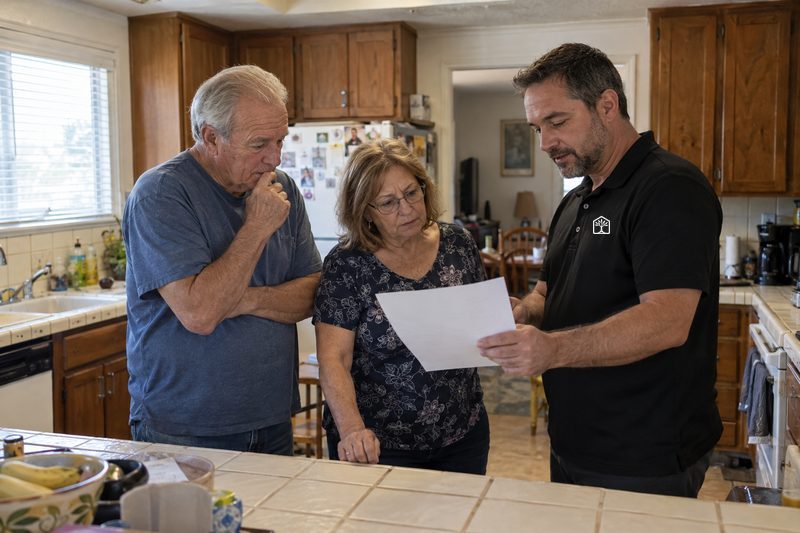
You have a cash offer, but you think your property might sell for more on the market. Is it worth putting it up for sale?
It could be. The question is how much more you would keep after the costs—and what you would need to do to get there.
You also have a choice about repairs. You can put the property on the market as-is, or do some work first. Those can lead to different prices, expenses, and timelines, so it helps to compare them separately.
You do not have to figure this out before calling Olive Tree Homes. We can walk through the property with you and help you compare a cash offer, selling as-is on the market, and making repairs first.
Three options to compare
| What to compare | Direct cash offer | On the market as-is | Make repairs, then sell |
|---|---|---|---|
| Your plan | Consider an offer from a buyer you deal with directly. | Reach more buyers with the property in its current condition. | Prepare the property before putting it on the market. |
| The work involved | Agree on what you can leave as-is and what you need to handle. | Arrange photos, access, and showings without taking on a renovation. | Choose and pay for the work, then prepare for photos and showings. |
| The main question | Does the offer give you enough to move on? | Could reaching more buyers improve what you keep? | Would the higher price cover the extra cost and effort? |
These options can overlap. A buyer who finds your property on the market may pay cash, and a direct buyer may still have conditions attached to the offer. Compare the actual terms, not just the label.
Can I put the property on the market without fixing it up?
Yes. Putting your property on the market does not mean you have to renovate it first.
You can offer it in its current condition and let buyers decide what they would pay. That gives you a chance to reach people beyond the buyers you contact directly, including people willing to take on the work themselves.
You will still need a plan for photos, showings, and access. You can also choose to do a little preparation, such as clearing belongings or cleaning, without taking on major repairs.
Be clear about the condition and what you are willing to do. Buyers may still ask for inspections or request a lower price. Before accepting an offer, make sure you understand any work or credits you would be agreeing to. To see which problems buyers discount most, read what buyers will and won't pay for in an as-is sale.
When would repairs be worth doing first?
Repairs are worth considering when they could increase what you keep enough to justify the cost, time, and effort.
Ask for two estimates of the likely sale price: one for the property as it is, and one after the specific work you are considering. Both should be supported by comparable sales. Then get quotes for that work.
If spending $10,000 could raise the sale price by $15,000, you have a possible $5,000 difference before any extra selling costs or time. That may be worthwhile to you—or it may not. These numbers are just an illustration, not an estimate of what repairs would add to your property.
You do not have to choose between doing nothing and a full renovation. Cleaning, paint, or a few selected repairs may be enough. Ask which improvements are likely to matter to buyers before committing to a bigger project.

What costs should I compare?
For each option, start with the likely sale price and ask for an estimate of what you would keep after the costs. Focus on a few main items:
- Agent fees and other agreed charges. Use the fees that apply to your arrangement. Agent compensation is negotiable; it is not one fixed rate for every sale. NAR explains your compensation choices.
- Closing costs and buyer credits. Ask the company handling the closing what you would pay. Include any amount you agree to contribute toward the buyer’s costs.
- Repairs and preparation. Include the work you will pay for, whether that is cleaning, paint, or larger repairs.
- The cost of waiting. Consider the extra time you would be paying to own the property, including utilities, insurance, and other ongoing costs.
- Your mortgage and other payoffs. These affect the money you receive. Ask for a payoff estimate rather than relying only on the balance on your statement. The CFPB explains the difference.
You do not need to work out every charge yourself. Ask your agent or the title or escrow company for a side-by-side estimate. Have them include costs you pay before closing, count each expense once, and account for any mortgage payments you make while waiting.
How different could the final numbers be?
A higher price can leave you with more money, but the gap may be smaller after expenses. Here is a made-up example showing all three options.
These are illustration numbers, not typical costs or an Olive Tree Homes quote. To keep the comparison simple, assume you have no mortgage or other liens. The costs shown include the expenses paid both before and at closing.
An example: price versus what you keep
| Price and costs | Direct cash offer | On the market as-is | Repair, then sell |
|---|---|---|---|
| Sale price | $300,000 | $320,000 | $345,000 |
| Agent fees, closing costs, and buyer credits | $5,000 | $18,000 | $20,000 |
| Repairs and preparation | $0 | $1,000 | $15,000 |
| Costs while waiting | $1,000 | $2,000 | $4,000 |
| What you keep after these costs | $294,000 | $299,000 | $306,000 |
In this example, selling on the market as-is leaves you with $5,000 more than the direct offer. Doing repairs first leaves you with another $7,000 beyond that—but you would need to pay for and manage the work.
The question is whether that extra money is worth it to you. If you have time and the repairs are manageable, it may be. If you need to move soon or cannot fund the work, a different option may fit better.
Your own numbers could favor any of the three. Use a realistic sale-price estimate, and ask what happens to the comparison if the price is lower, the repairs cost more, or the sale takes longer. Once you receive written offers, use those amounts instead of estimates.
Your next move
Skip the repairs. Get a guaranteed cash offer.
Tell us about your property and when you’d like to sell.
Get My Cash Offer →
What else matters besides the money?
Your schedule and the offer’s conditions matter too. A price that looks good on paper needs to come with terms you can work with.
Ask when you would close, when you would need to move, and what could let the buyer cancel or ask to change the deal. For a cash offer, ask for evidence that the buyer can pay. For any offer, review inspection and other conditions with your agent or attorney. NAR’s guide explains common contract conditions.
Include your own time in the decision: arranging repairs, providing access, keeping the property ready for showings, and handling a move. You may be comfortable taking on that work for a better result. You may also decide that a simpler sale is worth accepting less.
Let’s compare your options together
You don’t need to fix up the property or decide how to sell before you call us. We’ll walk through it with you, discuss your goals and timeline, and get you a guaranteed cash offer.
We’ll also look at whether putting the property on the market could leave you with more—and whether any repairs would be worth the expense. You can compare the expected proceeds, the work involved, and the timing before choosing a direction.
A cash offer and broader market exposure can be part of the same agreed selling plan. We’ll explain the proposed arrangement and applicable costs before you commit.

Tell us about your property. Let’s find the approach that works for you.
For a broader look at your options, read What’s the best way to sell your property?
Sources
This site is protected by reCAPTCHA and the Google Privacy Policy and Terms of Service apply.